Welcome to Cangzhou Yisu Plastic Packaging Co., Ltd. official website!


A Comprehensive Overview of Common Stainless Steel Fan Classifications: How Many Do You Know?
In fields such as industrial ventilation, environmental protection engineering, and building air conditioning, stainless steel fans have become key equipment due to their corrosion resistance, high-temperature tolerance, and long service life. However, with a wide array of product models available on the market, how can one select the appropriate type based on actual needs? This article systematically categorizes common types of stainless steel fans from three dimensions—working principles, structural forms, and application scenarios—to help you quickly grasp the core knowledge.
1. Classification by Working Principle: Centrifugal, Axial, and Mixed Flow Each Excels in Its Own Way
The core classification criterion for stainless steel fans is their airflow treatment method, which directly determines their applicable scenarios and performance characteristics.
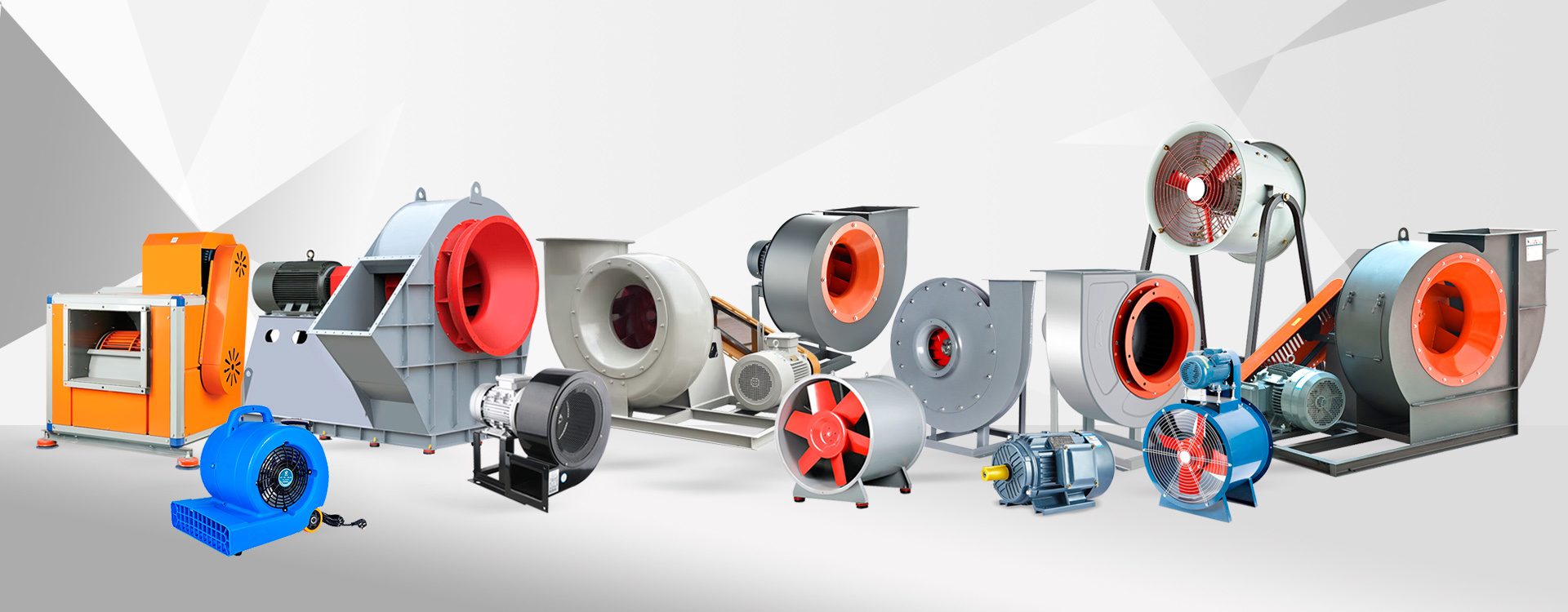
1. Centrifugal stainless steel fan
As the most widely used type, centrifugal fans generate centrifugal force through the high-speed rotation of the impeller, throwing gas from the center of the impeller outward to form a high-pressure airflow. Their typical feature is that the airflow direction is perpendicular to the impeller axis, making them suitable for scenarios requiring high air pressure. For instance, in chemical waste gas treatment systems, centrifugal fans can overcome pipeline resistance and transport corrosive gas-laden air to purification devices. In boiler applications, induced draft fans need to operate stably at high temperatures of 200°C, making the centrifugal structure paired with a water-cooled transmission system the preferred choice.
Representative models: 4-72 (general-purpose centrifugal fan), 9-19 (high-pressure centrifugal fan), GY4-73 (boiler draft fan).

2. Axial flow stainless steel fan
The airflow direction of the axial fan is parallel to the axis of the impeller, and the rotation of the impeller pushes the gas to flow along the axial direction. Its advantages lie in large air volume and low energy consumption, making it suitable for places that require large-scale ventilation. For example, the central air conditioning system in large shopping malls often uses axial flow fans to achieve air circulation; The dust removal system of industrial plants relies on their efficient ventilation capacity. Some high-end models also have rain and dust protection functions, which can be directly installed on roofs or walls.
Representative models: T35 type (axial flow fan), SF type (low-noise axial flow fan).

3. Mixed flow stainless steel fan
The mixed flow fan combines the characteristics of centrifugal and axial flow, with the airflow direction between the two. This design combines the advantages of axial flow fans while maintaining high air pressure, making it particularly suitable for complex scenarios such as high-rise building ventilation and underground garage smoke exhaust. For example, in the ventilation system of subway stations, mixed flow fans can simultaneously meet the needs of long-distance air supply and local smoke exhaust, reducing noise by more than 15% compared to centrifugal fans.
Representative model: SWF type (mixed flow fan).
3、 Classified by application scenarios: anti-corrosion, explosion-proof, and high-temperature customized solutions
Stainless steel fans have further evolved into specialized models for extreme working conditions in different industries.
1. Anti corrosion stainless steel fan
Made of ultra corrosion-resistant stainless steel materials such as 316L and 2507, equipped with anti-corrosion coatings or lining processes, suitable for strong corrosive environments such as chemical and electroplating. For example, the hydrochloric acid conveying system of a certain chemical plant uses a 2507 stainless steel fan, which can operate continuously for more than 5 years in a medium with a chloride ion concentration of 200ppm.
2. Explosion proof stainless steel fan
The key components such as impeller and casing adopt explosion-proof design, and the motor is equipped with explosion-proof shell, which is suitable for flammable and explosive places such as petroleum and pharmaceuticals. For example, in gas station oil and gas recovery systems, explosion-proof fans need to pass ATEX certification to ensure safe operation in explosive gas environments.
3. High temperature stainless steel fan
High temperature resistant stainless steel materials such as 304, 321, and 310S are selected, and when combined with a water-cooled transmission system, they can withstand temperatures ranging from 300 ℃ to 800 ℃. For example, in the circulating hot air system of a cement kiln, the 310S stainless steel fan can operate stably at 800 ℃ and has a lifespan three times longer than ordinary fans.
4、 Selection suggestion: Matching requirements is key
When choosing a stainless steel fan, the following parameters should be considered comprehensively:
1. Airflow and wind pressure: Calculate the required value based on pipeline resistance and air exchange rate;
2. Material selection: 304 stainless steel is suitable for general corrosive environments, 316L is used for strong acid and alkali environments;
3. Protection level: Outdoor installation requires a dustproof and waterproof level of IP55 or above;
4. Energy efficiency certification: Priority should be given to products that have passed the national first level energy efficiency certification, which results in lower long-term operating costs.
Taking Zibo Borui Wind Turbine as an example, its products cover over 2000 models and have passed ISO9001, CE, ATEX and other certifications, providing users with one-stop services from selection to installation. In a desulfurization project at a steel plant, Borui's customized 316L stainless steel fan successfully solved the problems of strong corrosion and high temperature, reducing annual maintenance costs by 40%.
The classification system of stainless steel fans reflects the diversification of industrial demand and the refinement of technology. From basic models to customized solutions, understanding the classification logic is the first step in selection, and choosing a reliable brand is the key to ensuring long-term stable operation.

Tag:
Previous Page
Previous Page:
Recommend News





Address: Road 3, Ji'ao Industrial Zone, Xinqiao Town, Luqiao District, Taizhou City, Zhejiang Province (Shanghai Qiba Fan Factory)

Online Message
Filling in your phone and E-mail information will help us to get in touch with you in time and solve your problems as soon as possible.